How Does an SCR Optimize SiC Heater Control Beyond Transformers?

Published: December 22, 2025

Silicon Carbide (SiC) heating elements are the backbone of high-temperature industrial processes, capable of operating at temperatures up to 1600°C. However, managing their power is a unique engineering challenge because SiC is a non-linear material. Its electrical resistance does not remain constant; rather, it fluctuates significantly based on temperature and, more critically, increases dramatically as the element ages. To handle these shifts, Silicon Controlled Rectifier (SCR) power controllers are employed to precisely modulate the energy delivered to the load.

The Traditional Approach: Phase-Angle Control

Historically, the standard method for controlling SiC heaters involved Phase-Angle control. By "chopping" each individual AC sine wave, the SCR can vary the voltage delivered to the element with high precision. However, this method has a significant drawback: efficiency. Operators typically avoid running phase-angle systems at low output ratios, generally keeping them above 30%. The reason is that at low outputs, the Power Factor (PF) drops precipitously—sometimes as low as 0.2 or 0.3. This inefficiency results in massive reactive power draws, leading to heavy financial penalties from utility companies and wasted electrical infrastructure capacity.

The Problem of Resistance and Aging

The complexity deepens when considering the lifecycle of a SiC element. Research indicates that SiC resistance can increase by 300% to 400% (3 to 4 times) over its operational life due to oxidation. According to the law of power P = V2/R, if the resistance R quadruples, the voltage V must double to maintain the same heat output P. In a direct-drive scenario, even if the SCR reaches 100% output, it may eventually fail to provide enough voltage to overcome the aging resistance, rendering the heaters useless prematurely.

The Legacy Solution: Multi-Tap Transformers

To bridge this gap, the traditional architecture involves placing a multi-tap transformer between the SCR and the SiC heaters. These transformers allow for "impedance matching." When the SiC elements are new and have low resistance, a lower voltage tap is used. As the elements age and resistance rises, the operator manually moves the connection to a higher voltage tap. This ensures the SCR always operates at a relatively high duty cycle, maintaining a better power factor while providing the "headroom" needed for old elements.

The Modern Alternative: Transformer-Free Fast Zero-Crossing

While the transformer-based system is reliable, it is also bulky, expensive, and requires significant maintenance. Modern power controllers are now shifting toward a "Transformer-Free" approach using Fast Zero-Crossing (also known as single-cycle or burst firing) to replace phase-angle control. This shift is possible due to three key factors:

Superior Power Factor: Unlike phase-angle control, zero-crossing passes full sine waves and switches only at the point of zero voltage. This keeps the Power Factor near 1.0 even at very low power outputs (e.g., 10%), while virtually eliminating harmonic noise on the grid.

Massive Voltage Headroom: By removing the step-down transformer and connecting the SCR directly to the line voltage (e.g., 480V), the system starts with a very low duty cycle (perhaps 10%) when the SiC is new. This leaves a massive amount of "digital headroom" for the SCR to increase the duty cycle as the element's resistance triples over time, without ever needing a physical transformer tap change.

Thermal Inertia and Stability: Traditional "slow" zero-crossing (multi-cycle) caused elements to "flicker," where the heater would expand and contract with the 1-second on/off pulses, leading to mechanical fatigue. However, Fast Zero-Crossing operates on a cycle as short as 20ms (50Hz) or 16.7ms (60Hz). Because SiC elements have high thermal mass, they cannot react to such rapid switching. The result is a perfectly stable temperature profile and a significantly longer element lifespan.

Conclusion

The traditional combination of SCR + Phase-Angle + Multi-Tap Transformer remains a robust, "battle-tested" solution for many legacy plants. However, for those looking to reduce capital costs, save floor space, and improve energy efficiency, the modern recommendation is clear: Smart SCR controllers utilizing Fast Zero-Crossing. By eliminating the transformer, manufacturers can achieve a leaner, more precise, and maintenance-free heating system that handles the challenges of SiC aging through intelligent software rather than heavy iron hardware.

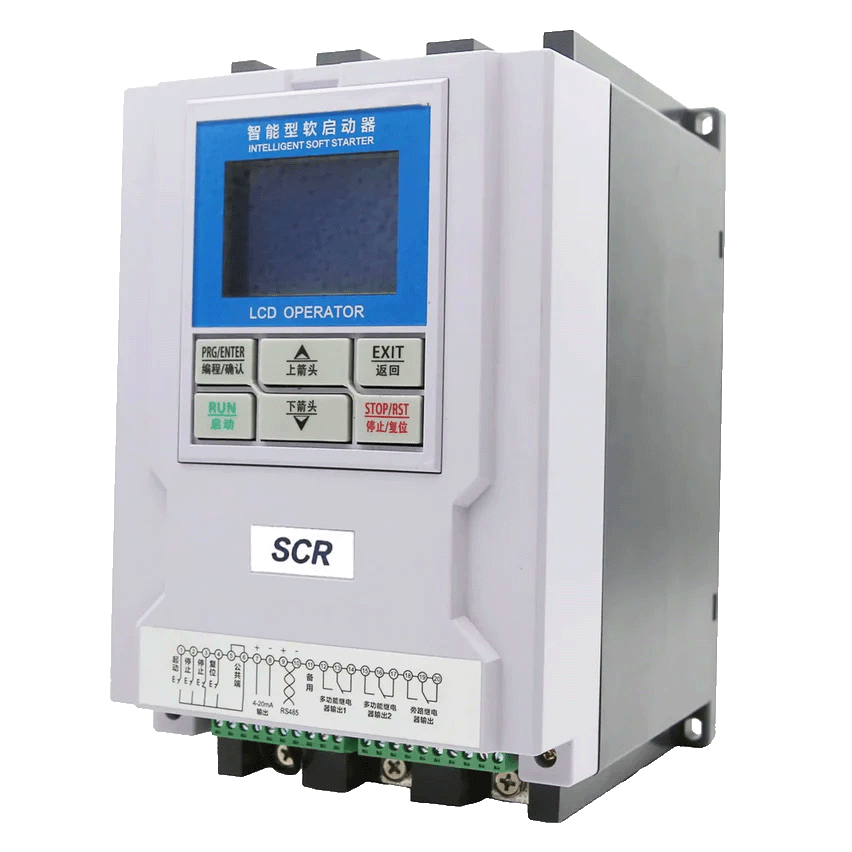
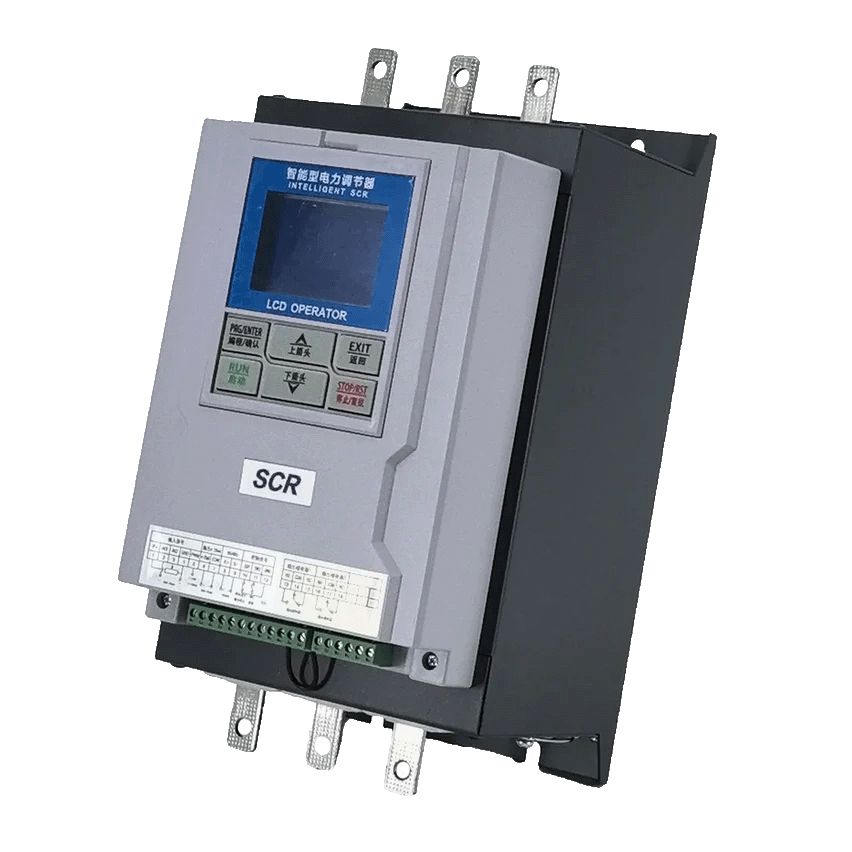
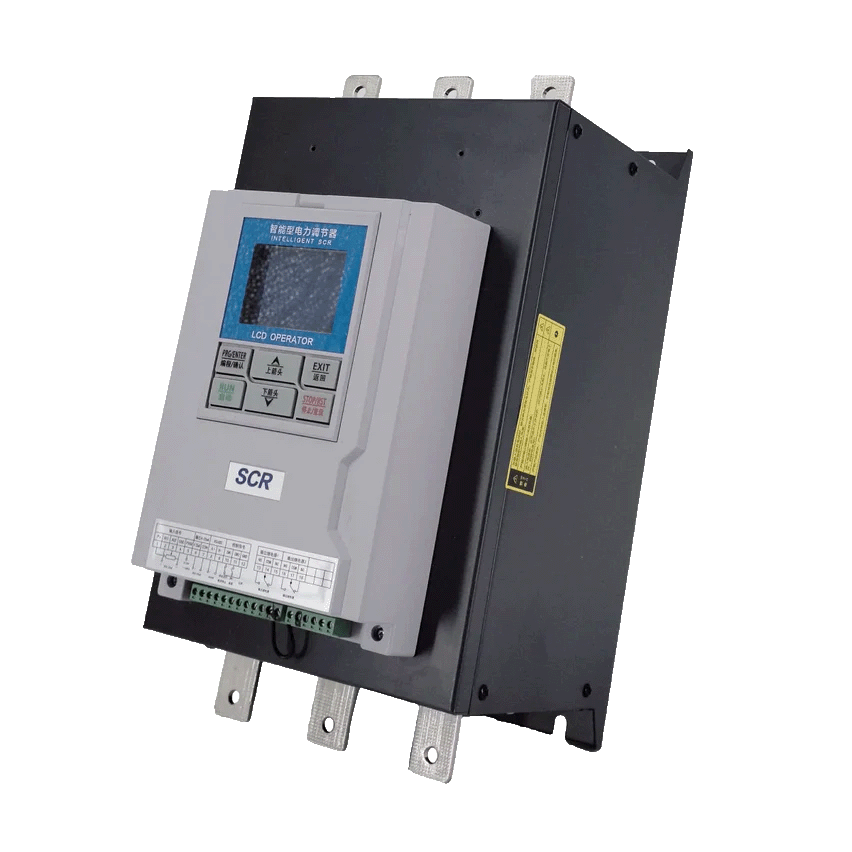
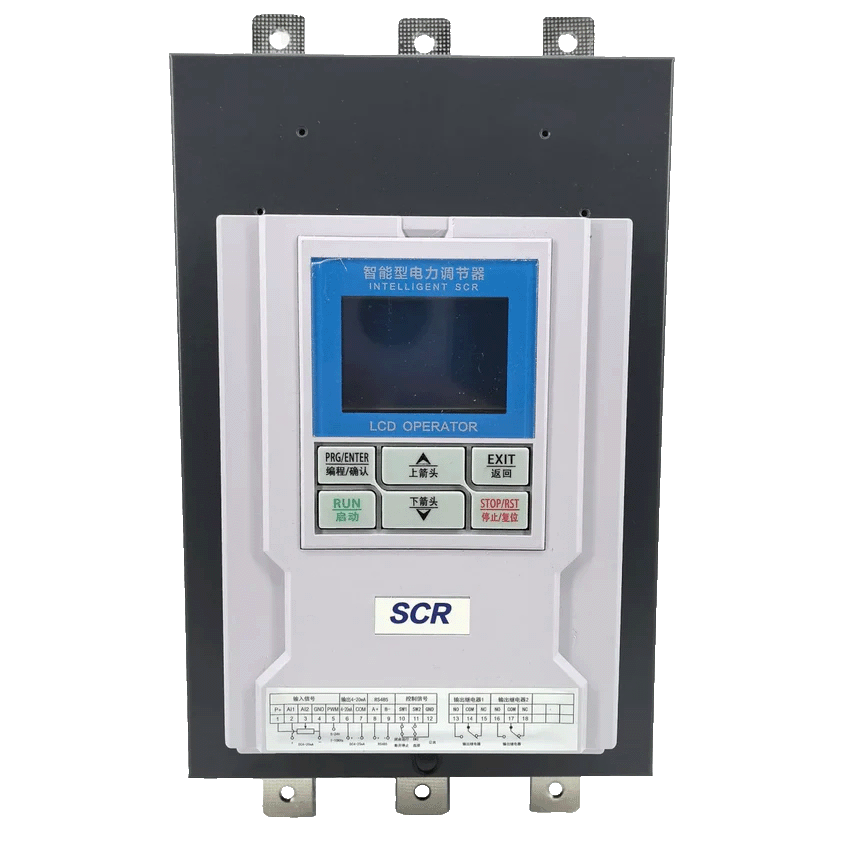
APR3H Series SCR Power Controller

Our controllers provide reliable, energy-efficient temperature management for your production processes.