How Does Phase-Angle Firing of the Thyristor Power Controller Work?
Published: October 25, 2025
It is phase-angle firing that thyristor controllers commonly adopt to precisely regulate the power of electric heaters.
Phase-angle firing, also known as phase cutting, phase-angle control, or phase-fired control (PFC), is a power-limiting method used for AC voltages. It regulates power by triggering a thyristor, SCR, triac, thyratron, or similar gated device into conduction at a specific phase angle of the AC waveform.
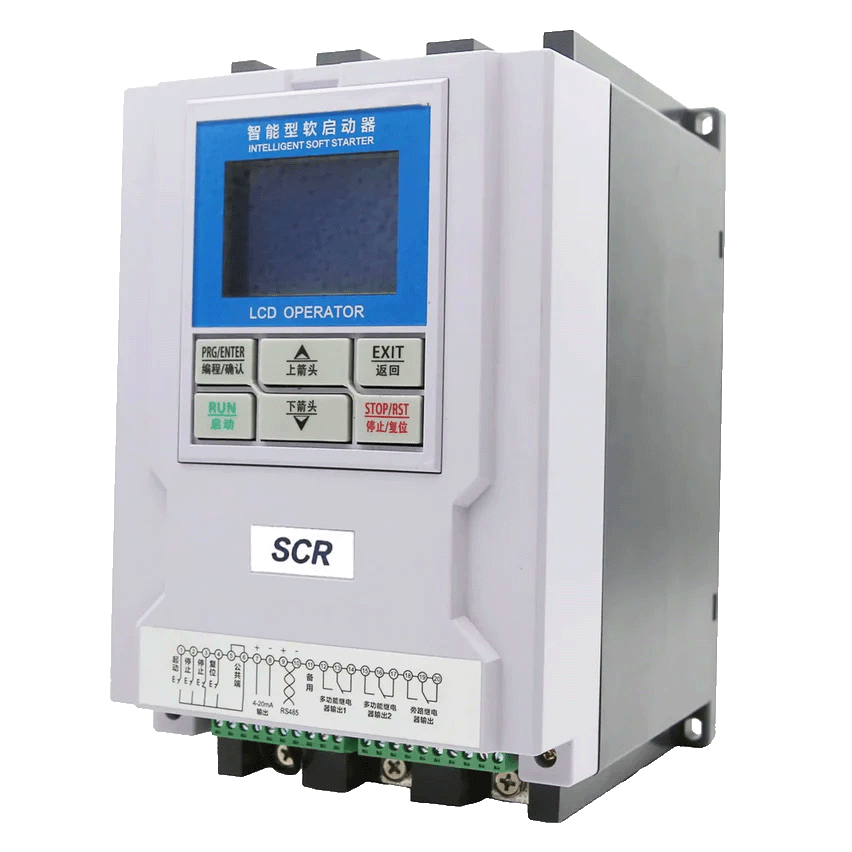
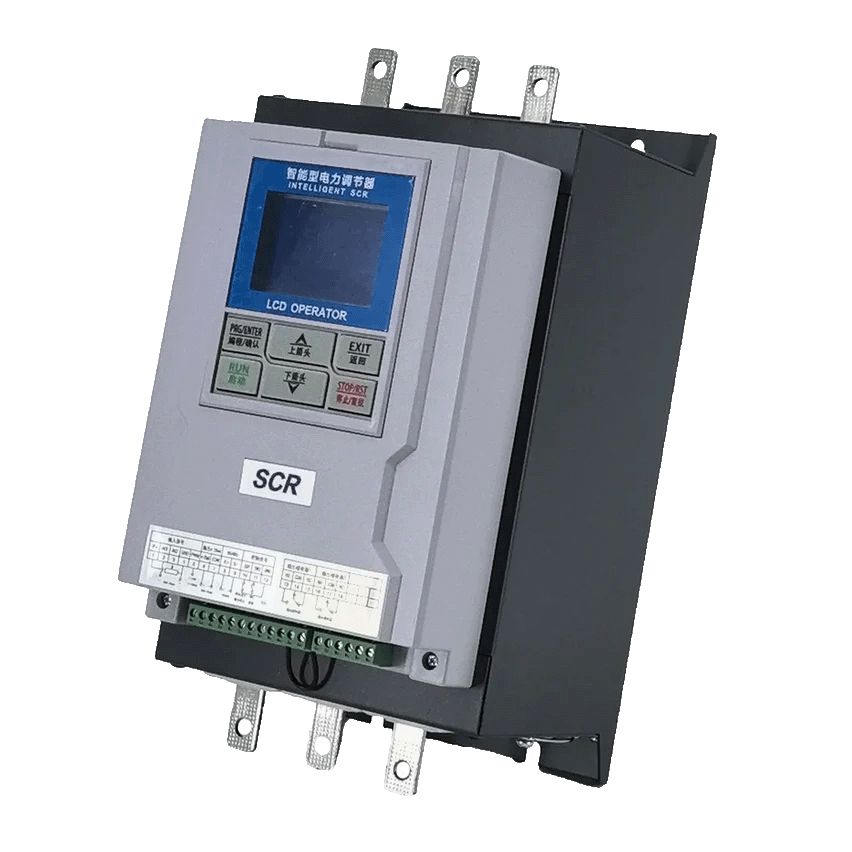
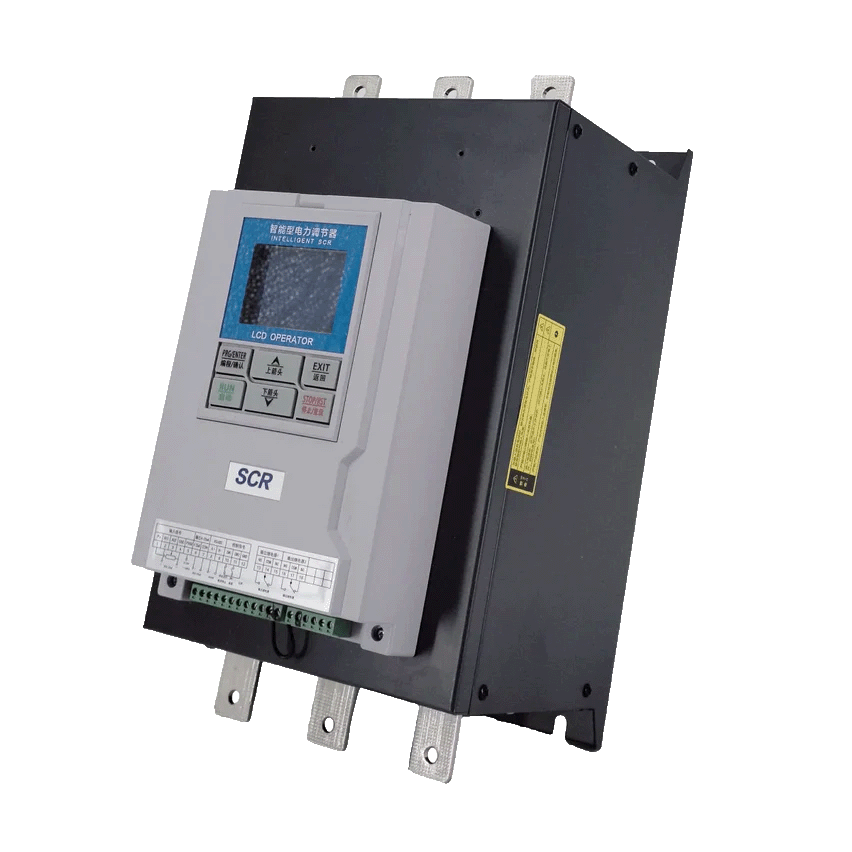
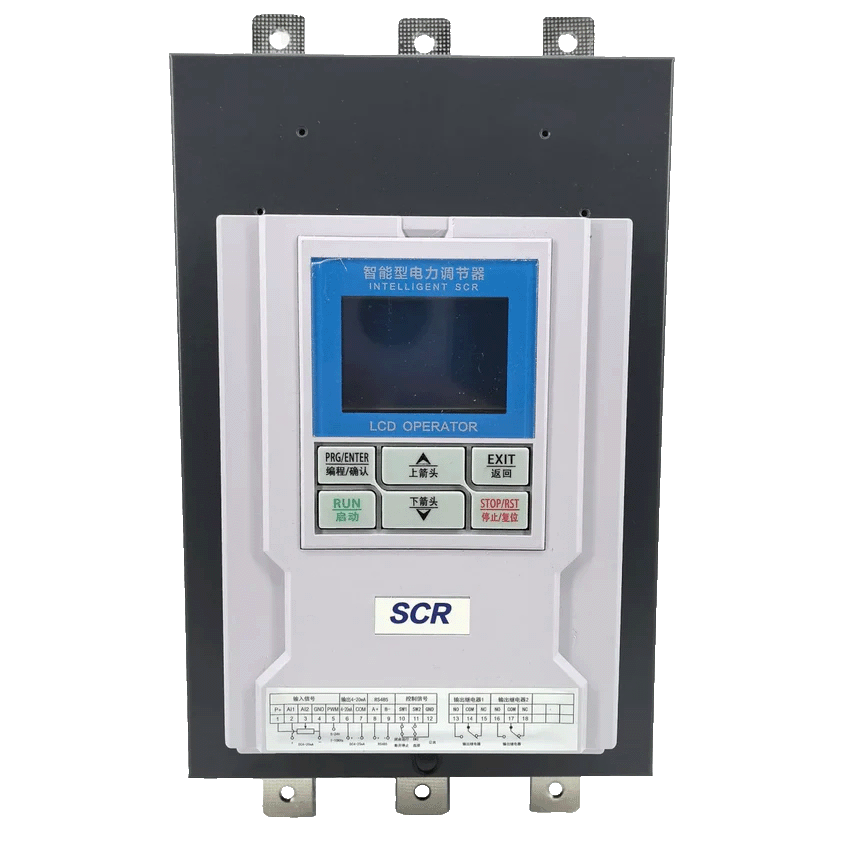
In the heating power controller, the thyristor acts like a switch that controls the on/off state of the heater in the main circuit. As shown in the figure of the APR3H series three-phase power controller, each phase is equipped with one thyristor. During each half AC cycle, the thyristor is triggered into conduction at a certain phase angle between 0 and 180 degrees, and then it naturally turns off at 180 degrees. The earlier the thyristor is triggered within the phase angle, the greater the power the controller delivers to the heater. Zero-crossing means triggering at the zero phase angle, where the thyristor conducts for the entire half cycle.
Waveform with Phase-Angle Control
The output voltage waveform of a thyristor power controller is clipped depending on the firing angle. At higher firing angles, the waveform is clipped more, resulting in a smaller area under the curve and, therefore, less average power delivered to the heater.
Summary
SCR (SCR Power Controller): Ideal for applications requiring precise power and temperature control, such as industrial heating systems. SCR allows for smooth, continuous modulation of power, making it suitable for systems needing fine adjustments.
SSR (SSR Temperature Control): Best for simple on/off control scenarios where fine temperature control is not critical. SSRs are quick and reliable but lack the precision of SCRs when it comes to power modulation.
If your heating furnace requires precise temperature control with smooth and continuous power adjustments, SCR would be a better choice. On the other hand, if you only need simple on/off control, SSR could be a more cost-effective and easier solution.
APR3H Series SCR Power Controller
Our controllers provide reliable, energy-efficient temperature management for your production processes.