How Phase-Angle SCR Power Controllers Interact with Fuses and Circuit Breakers?

Published: December 16, 2025

Introduction

When phase-angle SCR power controllers are introduced into resistive heating applications, a common concern from system designers and facility engineers is how upstream protection devices—such as fuses and circuit breakers—will behave under phase-controlled operation. In particular, questions often arise around peak current, waveform distortion, and whether these factors could lead to nuisance tripping even when the effective power is reduced.

This concern is understandable. Phase-angle control intentionally modifies the AC waveform by delaying the thyristor firing angle, which reduces RMS voltage and RMS current while leaving the instantaneous peak current largely unchanged. At first glance, this seems to suggest that protective devices might still “see” high current stress.

To address this concern with evidence rather than assumptions, we conducted a controlled laboratory experiment using a phase-angle SCR power controller, resistive heating loads, and standard fuses. The results provide clear and practical insight into how protection devices actually respond in real operating conditions.

Phase-Angle SCR Power Control: A Brief Overview

Phase-angle control regulates power by triggering the SCR at a specific point within each AC half-cycle.
By increasing the firing angle, a smaller portion of the sine wave is conducted, resulting in lower RMS voltage and current delivered to the load.

Key characteristics of phase-angle control include:
    •    Continuous and smooth power regulation
    •    High efficiency with minimal internal losses
    •    Unchanged peak current, while RMS current scales with output power

Because heating elements are purely resistive, the resulting current waveform directly follows the voltage waveform, making this control method especially suitable for thermal applications.

How Fuses and Circuit Breakers Respond to Current

Most protection devices used in industrial installations—including fuses, circuit breakers (MCBs/MCCBs), and residual current circuit breakers (RCCBs)—are not designed to respond to instantaneous peak current alone. Their operation is governed by different physical principles and time scales:

Fuses operate based on thermal energy accumulation (I²t). They respond to the RMS current over time, not to short-duration current peaks that do not generate sufficient heat.

Circuit breakers (MCBs/MCCBs) use thermal protection for overloads and magnetic protection for short circuits. Thermal tripping is based on RMS current and heating over time, while magnetic tripping requires the current to exceed a defined multiple of the rated RMS current for a short but finite duration, according to the trip curve. Neither mechanism reacts to instantaneous current peaks within a single phase-angle control cycle.

Residual current circuit breakers (RCCBs) are designed to detect leakage current rather than load current. Their fastest response time is typically 30 ms, which is still longer than a single phase-angle modulation event.

By contrast, phase-angle control operates within a single AC half-cycle, typically less than 20 ms at 50 Hz. While phase-angle control reshapes the waveform and increases peak current, these peaks are extremely short and do not persist long enough to trigger thermal accumulation or magnetic tripping mechanisms.

Experimental Setup

To validate the interaction between phase-angle SCR control and fuse behavior, the following test configuration was used:
    •    Protection device: Three fuses, each rated at 5 A
    •    Load: Three resistive heating elements, each rated at 2 kW
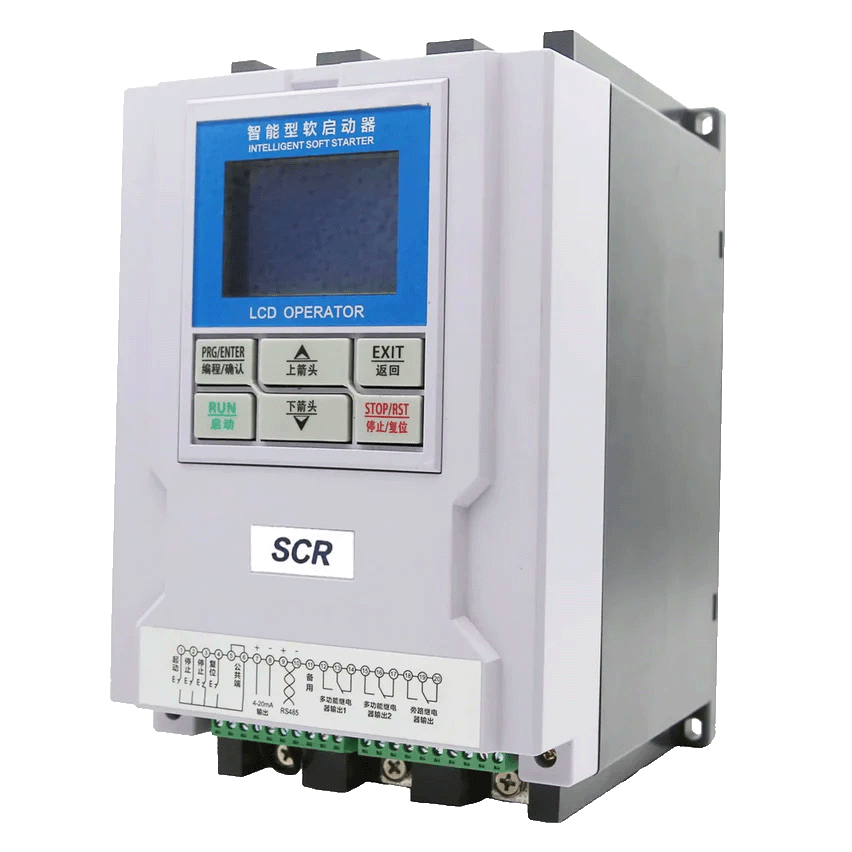
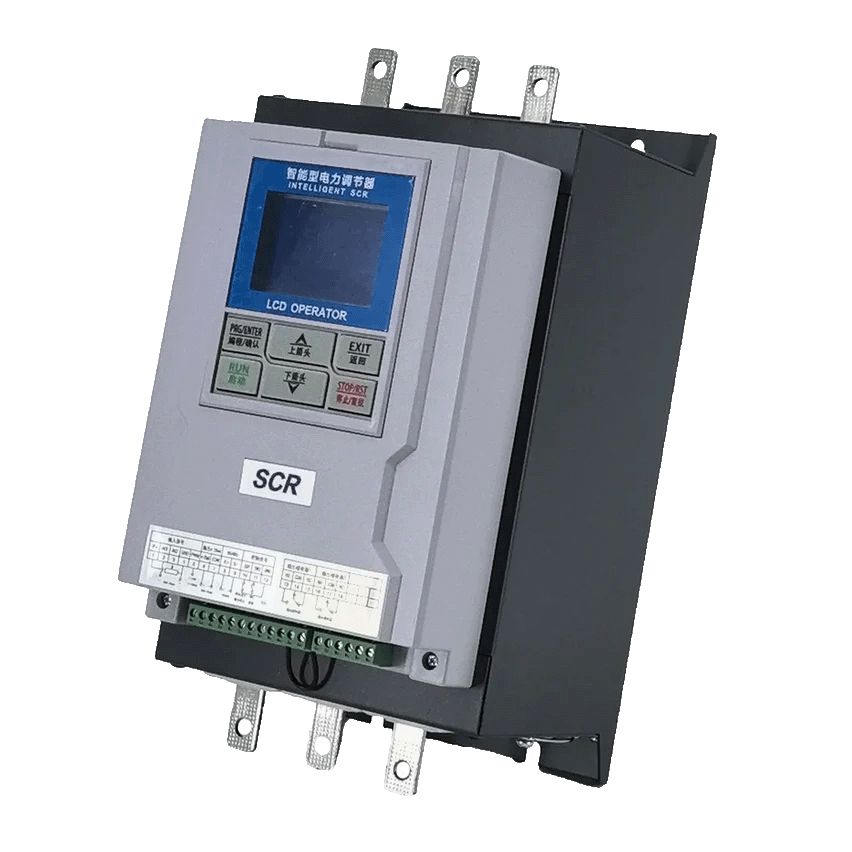
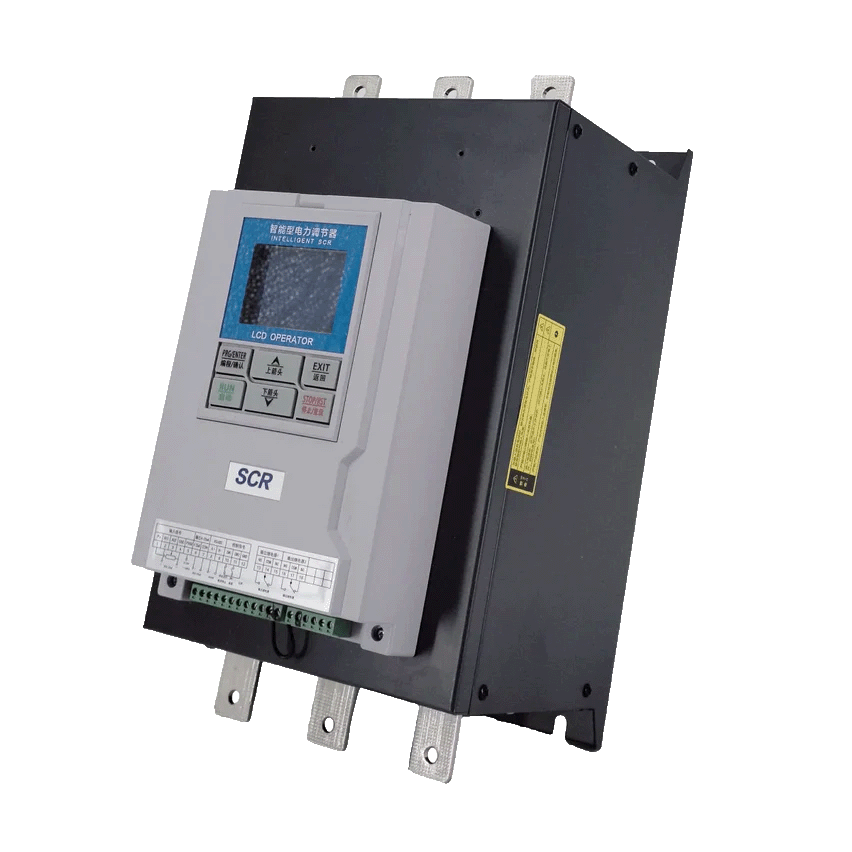
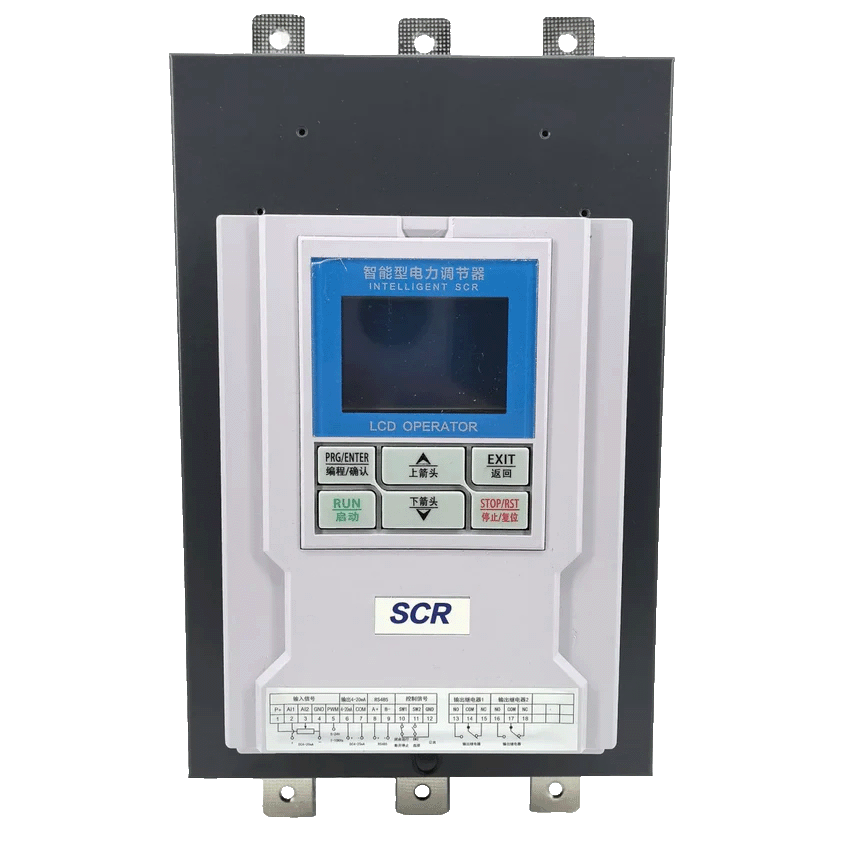
    •    Controller: Phase-angle SCR power controller
    •    Load configuration: Three-phase resistive load
    •    Control signal: 4–20 mA analog input

The fuses were selected to operate close to their rated current in order to clearly observe tripping behavior under different RMS current conditions.

Experimental Results and Observations

At a control signal of 15 mA, corresponding to approximately 69% output, the system exhibited:
    •    Peak current: 9–10 A
    •    RMS current: approximately 5.2 A
    •    Continuous stable operation with no fuse tripping

At 2 minutes and 20 seconds, the control signal was increased to 20 mA (100% output):
    •    Peak current remained unchanged
    •    RMS current increased to approximately 8.9 A

Within a few seconds of operating at this higher RMS current level, the fuses melted and tripped.

The critical observation is that fuse operation correlated directly with RMS current, not with peak current. Despite peak current being present at both operating points, tripping only occurred when RMS current exceeded the fuse’s thermal limit.

Practical Implications for System Design

This experiment confirms that in resistive heating applications:
    •    Phase-angle SCR controllers do not inherently increase the risk of nuisance fuse or breaker tripping
    •    As long as the total RMS current remains below the protection device’s trip threshold, stable operation can be expected
    •    Peak current alone is not sufficient to trigger fuse operation without sustained thermal stress

This is particularly relevant for applications such as industrial washing machines, ovens, furnaces, and process heaters, where dynamic power regulation is required under limited electrical capacity.

Conclusion

Phase-angle SCR power controllers regulate power by reducing RMS current while maintaining waveform peaks. Our experimental results demonstrate that standard fuses respond to RMS current and thermal energy (I²t), not to instantaneous peak current.

As a result, when SCR power controllers are correctly rated and applied, they can be safely integrated into systems with conventional electrical protection devices—without increasing the risk of unwanted trips.

For engineers designing smart-grid–aware or load-managed systems, this provides confidence that phase-angle SCR control is a reliable and protection-compatible solution for high-power resistive loads.

APR3H Series SCR Power Controller

Our controllers provide reliable, energy-efficient temperature management for your production processes.